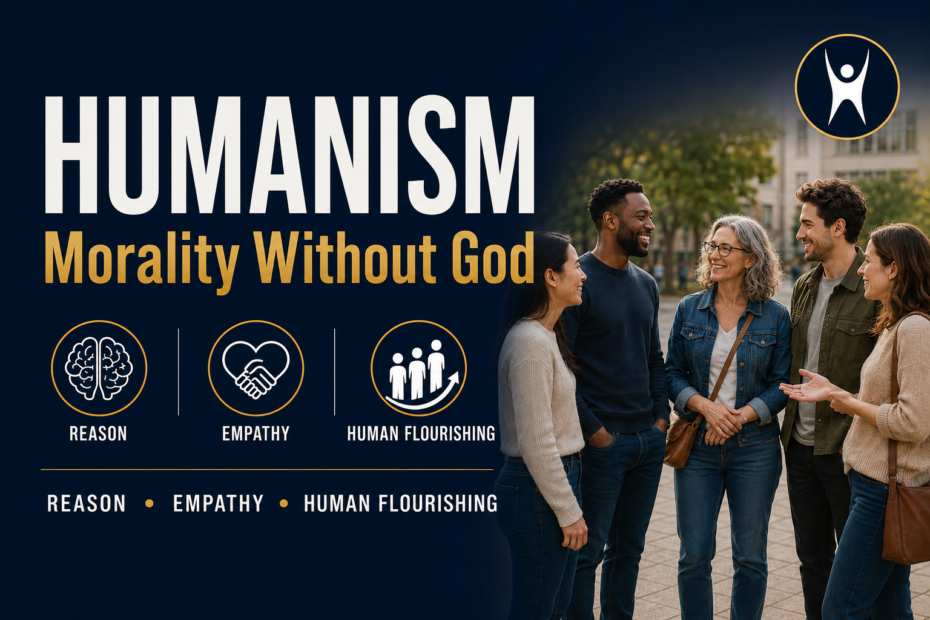
Humanism puts human beings at the center of morality, not gods, not holy books, and not ancient rules from societies very different from our own.
It says the purpose of morality is not to obey a deity, protect tradition, or fear punishment after death. The purpose of morality is to reduce suffering, increase well-being, protect dignity, and help human beings live better lives together.
That shift matters.
Instead of asking, “What does God want?” humanism asks, “What actually helps people thrive?”
Instead of grounding morality in authority, humanism grounds morality in consequences.
Does this action cause harm?
Does it protect freedom?
Does it increase fairness?
Does it respect human dignity?
Does it make life better for real people in the real world?
Because when morality is centered on human flourishing, we can test it, improve it, and correct it when it causes harm.
That does not make morality weaker. It makes morality answerable to real-world consequences.
And that is exactly what morality should be: accountable to the lives it affects.
More from DN:
https://linktr.ee/davincineptune